Process Requirements
1. The torque motor exhibits the following characteristics: It has relatively soft mechanical properties. When the preset torque exceeds the load torque, the motor automatically accelerates. When the preset torque is lower than the load torque, the motor automatically decelerates, even under the influence of the load torque’s reverse rotation. When the preset torque equals the load torque, the motor maintains a constant speed.
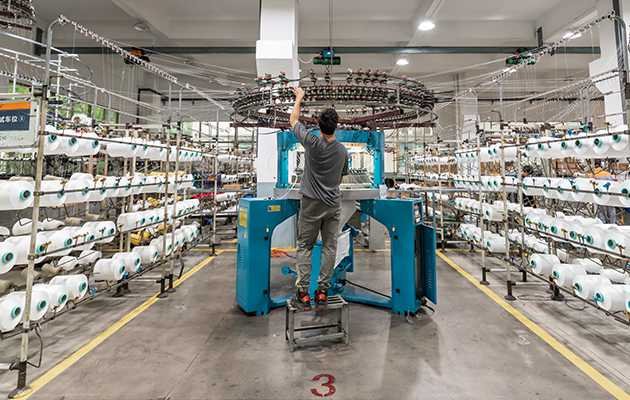
2. The output torque of the torque motor is configured by the controller. It is applicable to constant – tension unwinding and winding control and is widely utilized in industrial fields such as textile, wire and cable, metal processing, papermaking, rubber, plastic, and printing machinery.
3. Ordinary inverters can only be employed for open – loop speed regulation of AC motors. The motor torque in this case is entirely uncontrollable, and thus they cannot perform the functions of a torque motor.
4. The current – type vector control frequency converter, by means of a complex and precise vector control algorithm, achieves closed – loop control of the torque current. It can directly set and control the output torque of ordinary asynchronous motors, completely replacing the above – mentioned functions of the torque motor and even achieving better performance.
System Configuration
For the ordinary three – phase asynchronous motor, the number of poles and power of the three – phase asynchronous motor are selected in accordance with the requirements for high speed and torque within the application.
Inverter: The CD320 series open – loop vector control inverter adopts current vector control and has a built – in braking unit. The braking resistor is matched according to the motor power.
Ordinary asynchronous motors are utilized for constant torque control. Without encoder speed feedback, the motor tension can be directly set and controlled, directly replacing the torque motor.
Solution Advantages
1. There is no necessity to add a tension detection mechanism and a speed feedback encoder. The system structure is simple, presenting high cost – performance, and the installation and debugging are highly convenient.
2. The torque motor system is prone to damage due to heat and improper operation. The current scheme is employed to enhance the motor protection function, being easy to use and maintain. The system is safe and stable with a long service life.
3. The accuracy of torque control is higher than that of the torque motor.
4. It can be set to automatic taper torque control.
5. With the functions of static friction torque compensation and large – inertia acceleration torque compensation, the winding control effect is superior, and the operation is simpler and more flexible.
Similar Posts
Frequency Inverter for Permanent Magnet Synchronous Motors
I. Permanent Magnet Synchronous Motors 1. Principle of Permanent Magnet Synchronous Motors In a super –…
Solution for Music Fountain Operation
Introduction: The original fountain control system uses the main phonemes of music (frequency, amplitude, timbre, and…
Application of Solar Pump Inverter
Introduction: In the contemporary era, with the energy crisis intensifying globally, Invtar’s vigorously promotes the concept…
Ball Mill Frequency Conversion Retrofit Program
Power Consumption Analysis at Working FrequencyA ball mill needs to run for 19 hours. First, start…
Solutions for Multi-pump Constant Pressure Water Supply
1. Introduction: The control of the water supply system ultimately aims to meet users’ demand for…